PRP (Platelet Rich Plasma) Procedures 

As used by professional athletes such as Homer Bailey of the Cincinnati Reds, players from the Pittsburgh Steelers, Cliff Lee of the Philadelphia Phillies,  and former major league baseball player, Scott Williamson, PRP treatment are also available for patients at Beacon Orthopaedics. Dr. Henry Stiene, MD, is a sports medicine specialist at Beacon who performs this procedure.


Links to PRP Information

PRP Treatments 

PRP Testimonials

PRP FAQ 

Conditions Treated with PRP 

PRP Animations

Post PRP Exercises & Discharge Instructions


PRP Treatments


PRP is an emerging treatment in the field of regenerative orthopaedics. It has been in used in Europe for many years and Beacon is one of the first centers in the Midwest to utilize this treatment having performed over 1200 treatments since 2007. PRP is basically an acceleration of the body’s healing and regenerative powers.

Platelets are particles found in the blood whose primary purpose is to respond to injury and begin the healing process. They migrate to the site of injury and when exposed to injured tissue and release proteins into the bloodstream called growth factors. Growth factors recruit the body’s repair cells to the area of injury and these repair cells are known as stem cells. A stem cell doesn’t know what it is supposed to become until a growth factor signals it to become bone, ligament, tendon, muscle, or other tissues. These types of stem cells are called mesenchymal stem cells and are recruited from the bone marrow and adipose (fat) tissue. Growth factors also recruit stem cells called hematopoietic stem cells that create new blood vessels. Tissue cannot heal or repair itself if there is no blood flow which allows oxygen and nutrients to reach to sight of injury and to remove waste from the injured site. This is much like a construction site. The stems cells are the workers that will build the new tissue, the PRP are the subcontractors directing the workers, and the blood stream is the route by which the materials get to the site to build and repair.

Components of connective tissue such as tendon and ligaments have a very poor blood supply and once injured can be very difficult to heal. A tendon is made up of thousands of individual fibers called collagen and bundle together very neatly and orderly much like the fibers or wires in an electrical cable. When a tendon becomes injured because of overuse or injury, the body tries to repair the individual fibers and because of poor blood supply growth factors and stem cells can’t do their job correctly and fibers are repaired with poorly organized tissue commonly called scar tissue. Scar tissue does not have the same strength and elasticity as healthy tissue so when the same force, overuse, or trauma is placed upon the tissue containing scar, it fails, more tissue tears, more scar tissue develops and a vicious cycle of pain and dysfunction occur called tendinopathy. Tendinopathy is a very difficult problem to treat and treatments to date aim at relieving pain and restoring function, but the injured tissue remains. As a result, recurrence is likely and becomes very frustrating for the patient.

PRP is very successful at replacing this unhealthy tissue with healthy tissue and restoring function and allowing return to normal physical activities. PRP offers no quick pain relief and has no pain relieving properties. Pain gradually subsides as the injured tissue repairs itself. This can take weeks or months, but when successful, the effect is lasting. Most patients will need 2-3 treatments spaced about 4 weeks apart and most people will not feel any relief until a few weeks after the second treatment and that relief is gradual and sometimes like a roller coaster ride in that there will often be a few pain free days mixed in with a day or so of resolving soreness.

There are two populations of patients that benefit from PRP. The first is those with chronic pain from tendon or ligament dysfunction such as Achilles tendinosis in runners and those with acute injuries such as a tennis player with a muscle tear.

PRP is an acceleration of the body’s own healing process and thereby is a purely natural process so there is no risk of allergic reaction or reaction. The patient is not being given anything that doesn’t belong to them. Infection is very unlikely as platelets by nature are anti-infective which why it is very unusual to develop an infection when you fall and skin your knee.

At Beacon, all treatments are done under ultrasound guided needle placement to insure precise placement of the PRP at the injured site and insures the needle is not going where it should not such as uninjured tissue, nerve, or blood vessels.

The success rate for this procedure at Beacon is over 80% in terms of allowing patients to return to their desired level of physical, athletic, and recreational activities.

Back to Top


PRP Testimonials


"With the help of Dr. Stiene and his staff, PRP treatments helped my shoulder recover from its injury fuller, quicker, and healthier." - Homer Bailey, pitcher, Cincinnati Reds


"I am a recreational runner who had severe plantar fasciitis, and within four weeks following my SECOND of two PRP injections, I was able to begin running. Now I am back to my original form running 15-18 miles per week." -Tim Vannatta


“I suffered from heel pain since 2009, and finally in February of 2010, I was referred to Dr. Henry Stiene. After other treatment options failed, I found a new life after getting three PRP injections into my heel, I couldn’t be happier with the result. I walk everyday with no pain.” -Sherri Beal


Back to Top

PRP FAQ


How do I know if I am a good candidate for PRP?

Initially, you will be seen in consultation by Dr. Stiene in order to determine if you are a good candidate for the procedure. This involves reviewing your medical, athletic, and occupational history as it relates to your injury. The injured area will also be examined and imaged with diagnostic ultrasound as that is the imaging modality that will be used when treated with PRP. Any other previous imaging that you have had will also be reviewed. Once the consultation is complete, we will discuss the specifics of the procedure, as well as how long you might expect to miss work and how long it will take you to recover. We will also review the medications that you are taking and determine if any needed to temporarily stopped.

How much blood is drawn from the patient?

Depending on the injury, 30-60ml (one to two ounces) is drawn with a simple blood draw. The blood is placed in a separation chamber, spun in a special centrifuge. This takes about 15 minutes and then the platelets are collected in a syringe leaving 3-7cc (one to two teaspoons) to be placed at the site of injury.

How painful is the procedure?

The area of injury is anesthetized either with local anesthetic or by an ultrasound guided nerve block for more involved procedures or injuries that are difficult to anesthetize with a local anesthetic due to location, poor blood supply, or patient comfort. You will be conscious so you may feel the pressure of the physician’s hand or needle pressure.

About one in 10 patients may experience significant post-treatment pain that last for a few days and is thought to be due to a combination of factors such as release of the scar tissue, bone spurs, and a vigorous inflammatory response due to the PRP. Most patients will experience mild-moderate pain that can be managed with ice, Tylenol, and non-narcotic pain medicine.

How long will I be in the office and will someone need to drive me?

Patients are usually in the office for about an hour. It takes about 15-20 minutes to draw blood and process the platelets, the nerve block takes about 15 minutes to take effect and it takes the physician about 10-30 to complete the procedure. If you have a procedure that involves your right leg you will not be able to drive yourself because of the nerve block. If you drive a manual transmission and have procedure done to either leg or right upper extremity, you will need someone to drive you.

Is anything done at the site of injury other than injecting the PRP?

If the injured area contains scar tissue, it will be broken up or fenestrated with the needle to stimulate blood supply, create channels for PRP to travel through, and activate as many platelets as possible. This is done through the skin with a needle under ultrasound guided and is also know as a percutaneous tenotomy. If there is a bone spur present it will be released with the needle and if calcifications are seen within the tendon those will be broken up with the needle as well. Once released and broken up the bone spurs and calcifications remain inert and do not cause any problems.

How soon can I return to normal and athletic activities?

PRP offers no instant pain relief, but regenerates healthy tissue which takes a number of weeks. Most patients are able to return to work the day following the procedure unless they are 1 in 10 that has a post-injection flare and it that situation you may need an extra day off work. Return to athletic activity depends on the type and site of injury. Most chronic tendon injuries that have failed to respond to any other type of treatment will generally take quite a number of weeks to heal. Injections into joints and acute muscle injuries respond quite a bit sooner.

Will I need to go to physical therapy?

If you are being treated for a chronic tendon injury or arthritis, you will generally be able to do a home exercise program if you have already worked with a physical therapist. If you have an acute injury or have not worked with a therapist in the past, you will likely spend a few visits with a physical therapist who will also give you a home exercise program.

How many PRP treatments will I need?

Most patients need 2-3 treatments if being treated for arthritis or chronic tendinosis. Acute muscle injuries need 1-2 treatments. Age also plays a factor because as we age, we have less stem cells as this can affect the number of treatments received. Younger patients generally need treatments less frequently.

Who is not a candidate for PRP treatment?

Patients with active infections or cancer are generally not candidates. Patients who use aspirin on a daily basis will need to discontinue the aspirin about 5-7 days prior to treatment. Those who use anti-inflammatory medicines (NSAIDS) such as alleve, ibuprofen, and prescription anti-inflammatory will need to stop those medicines for 2-5 days prior to treatment and usually after treatment as well.

Does insurance cover this procedure?

Generally not if PRP is the primary procedure; however, insurance may cover other aspects of the visit especially if the primary procedure you are receiving is a tenotomy which will be discussed during your consultation. Beacon Orthopaedics employs patient advisors/financial counselors who will discuss the insurance and coverage issues with you.

Back to Top

Conditions Treated with PRP


Shoulder

Rotator Cuff Tendinosis/Tears
AC & Glenohumeral Joint Arthritis
Bicep Tendinosis

Elbow

Lateral/Medial Epicondylitis (Tennis/Golfers Elbow)
Injuries to the Flexor, Extensor, and Bicipital Tendons
Ulnar Collateral Ligament Injuries
Elbow Arthritis

Hand & Wrist

Tendonitis
Muscle tears
Arthritis

Knee

Patellar Tendinosis (Jumper’s knee)
Quadricep tendinosis
Collateral Ligament Tears
ITB Friction Syndrome
Quadricep/Hamstring Strains
Kneecap Pain (Patellofemoral Syndrome)
Arthritis

Foot & Ankle

Achilles Tendon Injuries
Peroneal/Posterior Tibialis Tendon Injuries
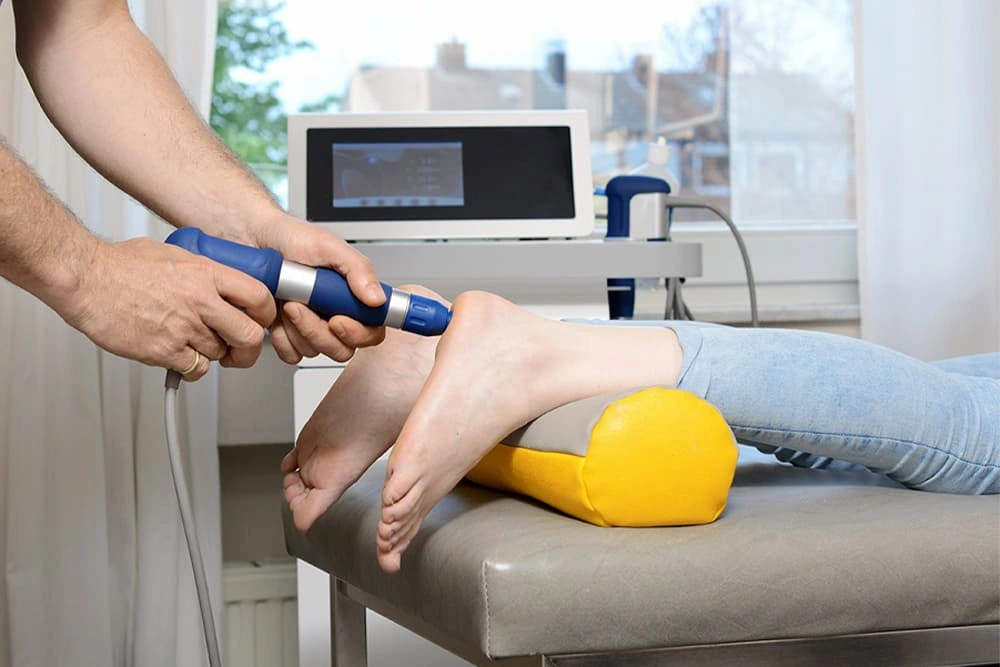
Plantar Fasciitis
Foot and Ankle Arthritis
Chronic Ligament Injuries

Hip/Pelvis

Trochanteric Bursitis
Hamstring Injuries
Pubic Symphysis Pain
Piriformis Syndrome
Hip Arthritis

Back to Top

PRP Procedure Animations

Back to Top

Post PRP Exercises & Discharge Instructions

Below you will find multiple documents available for download that will guide you on your road to recovery after your PRP treatment.

Discharge Instructions

Exercises for Medial Epicondylitis

Exercises for Lateral Epicondylitis

Achilles and Plantar Fascia Stretching Instructions

Back to Top